VerifiedEstablished context or regulated use
EmergingDeveloping research requiring more validation
AttributedManufacturer, historical or testimonial claims
Research update · 9 October 2026

New research, clearly explained

Selected peer-reviewed findings and original sources. Evidence classifications refer to the specific study context, not DSVibe product efficacy.

Emerging · systematic review

40 Hz light and sound: preliminary human evidence

A 2026 GeroScience review of eight small human studies found neural responses to 40 Hz sensory stimulation, while consistent cognitive benefit was not established. These findings do not validate unrelated frequency devices.

Read the review →
Verified observation · review

Music and distributed brain activity

A review of human intracranial recordings describes auditory-cortex encoding of acoustic features. Broader representations involving emotion, memory and movement require careful interpretation. This does not show that particular tones treat illness.

Read the review →
Verified observation · human study

Brain–spinal–muscle rhythms

Researchers measured coherent 10–35 Hz activity across brain, cervical spinal cord and muscle in nine people during a hand contraction. Physiological synchronization during movement is not evidence of a universal healing frequency.

Read the study →
Emerging · sham-controlled trial

PEMF knee study: mixed outcomes

A randomized study of 60 people reported an improvement in knee-extension strength at one follow-up for a specific PEMF protocol versus sham, but not consistent improvements in structural, mobility or patient-reported outcomes. The result does not transfer automatically to other devices.

Read the clinical trial →
Verified engineering · evidence boundary

Coil geometry and copper

Electromagnetic output depends on current, geometry, conductor properties, waveform and measurement distance. Copper or a distinctive winding pattern does not independently establish a clinical health benefit.

Read our evidence guide →
Patent watch · not clinical evidence

Closed-loop stimulation

A patent-family publication describes stimulation informed by physiological sensing. A patent documents a technical disclosure, not proof of treatment efficacy or regulatory authorization.

View patent record →

Reading guide: Verified = observed result or established physics in its stated context; Emerging = early or limited evidence; Speculative = untested extrapolation. Educational information only, not medical advice or a claim of DSVibe product efficacy.

Research update · 23 October 2026

New frequency research: evidence and limits

Human research, electromagnetic engineering and patent developments. Evidence labels describe the specific findings, never efficacy of DSVibe products.

Verified observation · randomized crossover study

Vibratory guidance during paced breathing

A study of 72 healthy volunteers compared visual guidance, vibratory guidance and no guidance during paced breathing. Both guidance methods increased short-term heart-rate variability relative to unguided breathing, without a significant difference between visual and vibratory guidance.

Limit: Guidance-assisted breathing is not proof that vibration itself heals tissue.

Read the study →
Emerging · participant-blinded study

Focused attention and sensations between the hands

A controlled study involving 107 healthy young adults reported stronger sensations between the hands following an embodied-attention practice than a comparison activity. The study measured participants' experience; it did not establish an external energy field.

Read the study →
Emerging · clinical evidence synthesis

Clinical magnetic stimulation and cognition

A synthesis of randomized trials reported a small average cognitive effect for clinical repetitive transcranial magnetic stimulation (rTMS) compared with sham. Such specialized clinical equipment and protocols are not interchangeable with consumer PEMF devices or copper coils.

Read the synthesis →
Verified negative finding · pilot trial

40 Hz light: prespecified EEG outcomes

A small controlled pilot comparing 40 Hz and 70 Hz light stimulation in older adults found no significant difference in its prespecified resting gamma-power and connectivity outcomes. Exploratory observations do not establish dementia prevention or treatment.

Read the pilot study →
Emerging · exploratory physiology

PEMF orientation and pulse-wave measurements

An exploratory 10 Hz pulsed-field study in 20 healthy volunteers reported orientation-sensitive changes in selected pulse-wave measurements. These acute measurements do not establish improved circulation or a therapeutic benefit.

Read the study →
Patent watch · engineering disclosure

Magnetic-stimulation coil winding

A published patent application describes flattened-wire coil geometry for magnetic stimulation. Patent publication does not establish clinical efficacy, regulatory authorization or special healing properties of copper.

Read patent record →

Evidence guide: Verified = measured outcome in the stated study or established physics; Emerging = preliminary or limited evidence; Speculative = hypothesis without adequate testing. Educational content only. No finding here demonstrates medical efficacy for a DSVibe product.

Research update · 16 October 2026

New evidence and research context

Research summaries distinguish experimentally measured outcomes from potential applications. Findings do not establish efficacy for DSVibe products.

Emerging · human research

40 Hz sensory stimulation: neural response is not guaranteed entrainment

A recent human study of combined light and binaural-beat stimulation illustrates why a rise in gamma-band EEG power cannot, on its own, establish that brain activity has locked to the stimulus rhythm. Stimulation modality, timing, analysis method and control conditions matter.

Evidence boundary: This does not establish a cognitive or clinical benefit from 40 Hz stimulation or any DSVibe product.

Explore primary literature →
Verified · electromagnetic engineering

Electrode placement changes exposure

In noninvasive electrical stimulation, electrode positioning changes the spatial distribution of modeled electric fields. Frequency alone does not specify tissue exposure.

Evidence boundary: Modeled field changes do not prove clinical efficacy and cannot be generalized to unrelated copper coils.

Explore primary literature →
Emerging · neuroscience

Sound processing and attention

Studies of auditory discrimination and attention examine how experience, signal quality and neural processing shape perception. These findings support precise auditory research, not organ-specific healing-frequency claims.

Explore primary literature →
Verified · negative finding

Resting EEG is not a simple creativity score

A reported study of 91 adults did not find a significant prediction of originality from resting EEG measures. Negative findings help distinguish reproducible evidence from oversimplified brainwave labels.

Explore primary literature →
Emerging · focused ultrasound

Targeted ultrasound neuromodulation

Focused ultrasound can interact with neural tissue under carefully specified exposure conditions. Clinical efficacy and safety are indication- and protocol-specific and require controlled evaluation.

Explore primary literature →
Speculative · copper geometry

Special copper-coil healing claims remain unverified

Coil geometry influences measurable electromagnetic fields. There is no established clinical basis for asserting that sacred geometry, particular winding counts or copper alone produces unique healing effects.

Read evidence references →

Evidence guide: Verified = measured finding or established physical principle; Emerging = limited or early research; Speculative = untested interpretation. Educational information, not medical advice or a product-treatment claim.

Research topics

Science, history & frequency

Review PEMF/HMF, Rife, scalar terminology, sacred geometry, Tesla, tachyons and related concepts with clear distinctions between evidence, history, interpretation and manufacturer claims.

Tachyon concept visualization
Verified context

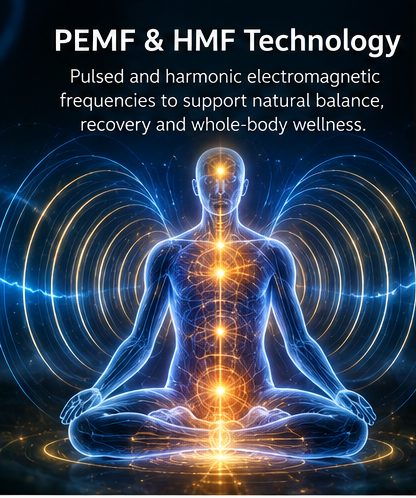
PEMF / HMF

PEMF is an established device category in specific regulated medical applications. Evidence for one device or waveform cannot automatically be generalized to all products.

View details →
Star coil transmitter
Conceptual / emerging

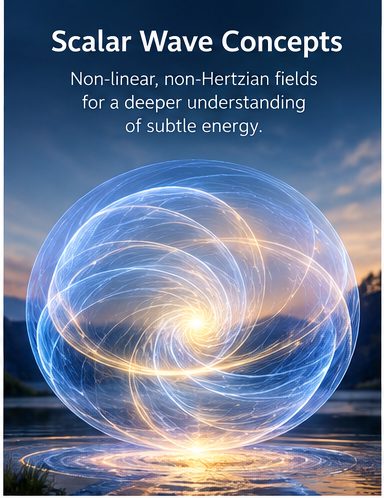
Scalar Technology

“Scalar” has a precise mathematical and physical meaning. Broader wellness uses of the term should be treated separately from established physics.

View details →
Lightstream Wand
Historical context

Rife Compatible

Royal Rife is historically associated with frequency-device claims. Disease-treatment claims for Rife machines are not established clinical facts.

View details →
Sacred Staff
Cultural / interpretive

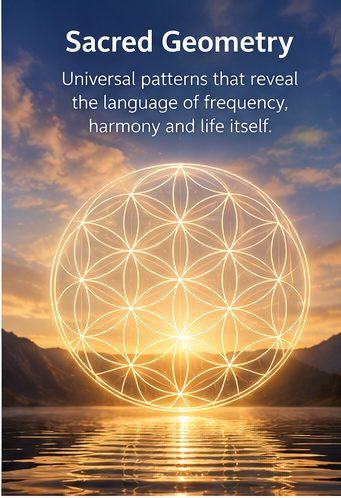
Sacred Geometry

Geometric patterns have longstanding mathematical, artistic and spiritual significance. Metaphysical interpretations are presented as interpretation.

View details →
DSVibe Cube
Historical engineering

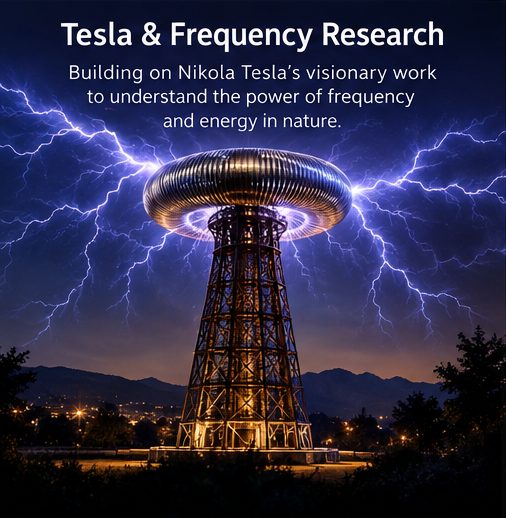
Tesla & Resonance

Tesla’s documented engineering work includes alternating current, induction and wireless power. Later metaphysical claims are kept distinct from that record.

View details →
DSVibe coil
Hypothetical

Tachyons

Tachyons remain hypothetical faster-than-light particles in theoretical physics; experimental evidence has not established their existence.

View details →
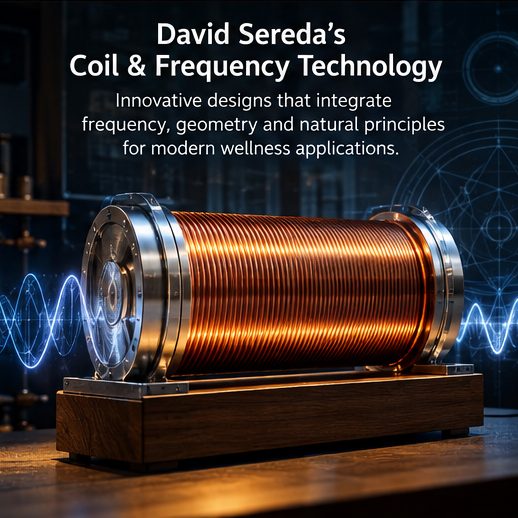
David Sereda coil and frequency technology visualization
Manufacturer technology

David Sereda Coil Technology

Explore the design language, materials and manufacturer-described concepts used across David Sereda coil systems, while keeping manufacturer claims distinct from established clinical evidence.

View details →
Research references

Research archive

Browse selected studies, reference categories and evidence notes so you can trace claims back to their source and judge relevance for yourself.

Foundational magnetic-field literature

  • Vallbona & Richards — evolution of magnetic therapy
  • Bassett — beneficial effects of electromagnetic fields
  • Quittan et al. — clinical effectiveness review
  • Trock et al. — electromagnetic fields and musculoskeletal disorders

Research categories

  • Arthritis & osteoarthritis
  • Cell generation & tissue repair
  • Circulation & edema
  • Fibromyalgia & pain
  • Bone healing & osteoporosis
  • Nerve repair & neuropathy
  • Migraine & multiple sclerosis
  • Tendon and wound healing

How to use this research

Research on PEMF or magnetic-field exposure does not by itself establish efficacy for a specific Lightstream product. Device, waveform, field strength, frequency, duration and clinical indication all matter.

Explore Research References
Discuss the technology

Bring your research questions to the Wednesday Zoom.

Bring questions about products, research, terminology and evidence. Wednesdays at 3:30 PM PST.

Get the Zoom Link